Strong results do not happen by chance.
Successful organisations need teams that communicate well. They need people who work well together. They also need teams that stay focused on shared goals. That is why many companies invest in high-performance team training.
For business leaders in the UAE, this matters more than ever. Change is constant. Pressure is rising. Competition is strong.
Organisations need teams that are engaged, adaptable, and ready to perform. Read on to learn what a high-performing team is and how to run one.
What Is a High Performing Team?
A high-performing team is a group of people who work well together and achieve shared goals consistently. Each person understands their role, communicates clearly, takes responsibility, and supports continuous improvement.
High-performing teams often show:
- strong communication
- shared goals
- trust
- accountability
- adaptability
- a commitment to improvement
These teams aren’t perfect. They still face pressure and setbacks. The difference is that they respond well, learn quickly, and keep moving forward.
Why High Performing Teams Matter
Every organisation wants better productivity, stronger collaboration, and better results. Teams are central to all of this. When companies focus on creating high performance teams, they often benefit from:
- faster decision-making
- fewer misunderstandings
- stronger employee engagement
- better problem-solving
- improved customer experience
- stronger overall performance
This is especially important in fast-moving industries, where teamwork directly affects service, sales, and growth.
Characteristics of High Performing Teams
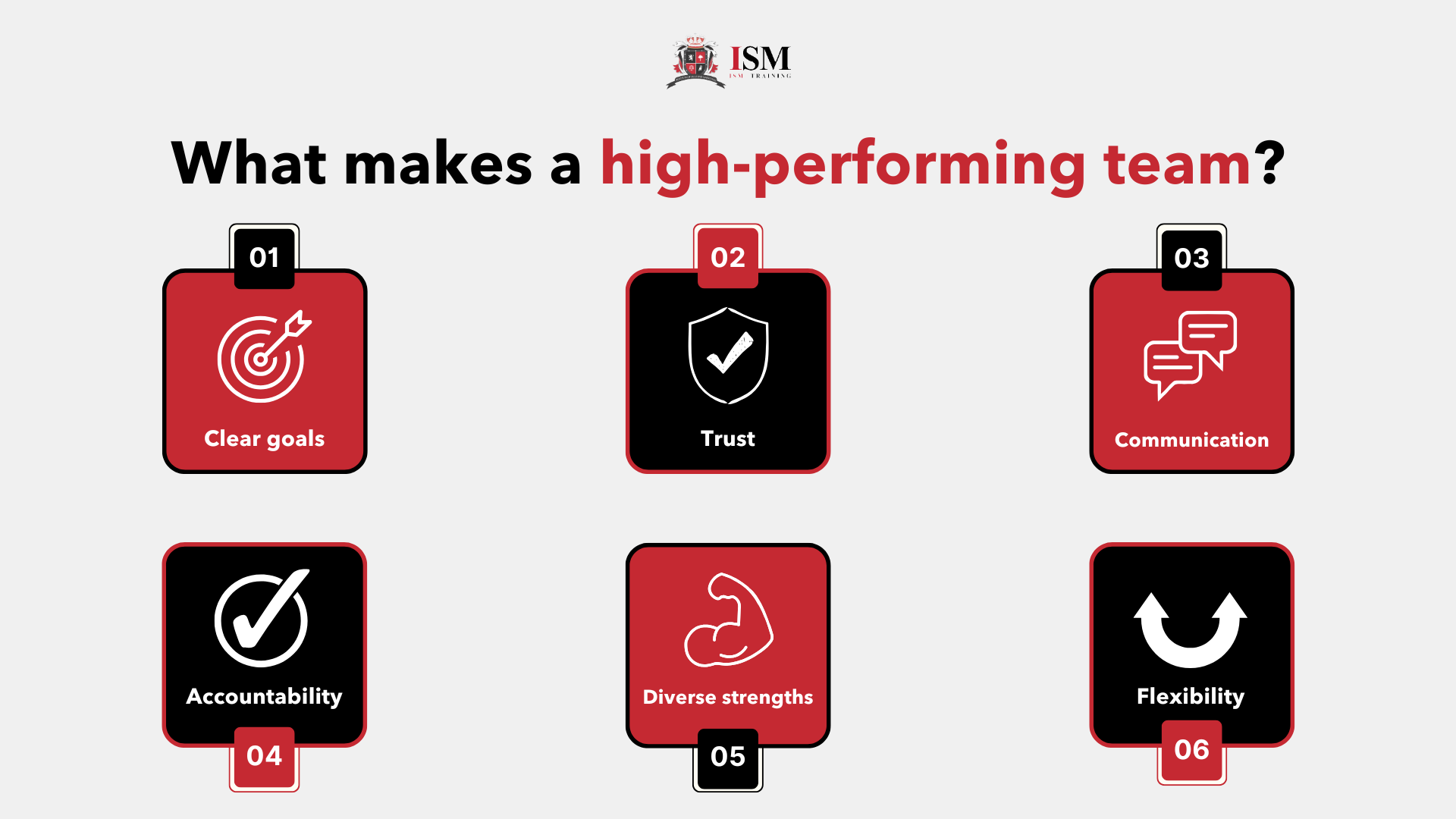
To improve team performance, leaders need to understand the key traits of high-performing teams.
Clear Goals and Direction
Strong teams know what they need to achieve and stay focused on priorities, deadlines, and results.
Trust
People feel safe to share ideas, ask questions, and raise concerns without fear.
Strong Communication
According to McKinsey & Company, communication results in a 25% increase in team productivity. Clear communication, active listening, and useful feedback help teams stay aligned.
Shared Accountability
Team members take ownership of their work, focus on solutions, and support each other.
Flexibility and Resilience
High-performing teams adapt quickly, stay calm under pressure, and keep moving forward.
Respect for Different Strengths
Great teams use different skills and perspectives to improve performance and results.
How to Build a High Performing Team
Many leaders want to know how to develop a high performing team in real business conditions, not just in theory. The good news is that the process can start with a few practical steps.
1. Set a clear purpose
People perform better when they understand why their work matters and what the team is trying to achieve.
2. Define roles clearly
Clear roles reduce confusion, improve accountability, and help work move faster.
3. Build trust
Harvard Business Review reported that more than half of employees trust strangers more than their managers. A lack of trust leads to unhappy teams.
Trust grows through consistency, honesty, and fairness. Team leaders who want success in building effective teams need to model these behaviours every day.
4. Invest in training and development
Training helps teams improve open communication, collaboration, accountability, and problem-solving in practical ways.
Leading High Performance Teams
There is an important difference between managing tasks and leading high performance teams. Managers often focus on deadlines and workload. Leaders also focus on trust, confidence, motivation, and team growth.
Strong leaders help teams perform by:
- giving clear direction
- removing barriers
- supporting development
- encouraging accountability
- helping people stay focused
- building a culture of trust
This is why leading high performance teams is such an important skill for today’s managers. Teams need leaders who can guide performance without creating fear or confusion.
High Performance Activities That Improve Teamwork
Formal training matters. However, leaders can also use practical high-performance activities in the workplace.
- Goal alignment sessions help teams discuss priorities, expected results, and current challenges.
- Role clarity exercises help people understand responsibilities and dependencies.
- Feedback practice builds trust and confidence over time.
- Problem-solving workshops encourage collaboration around real business challenges.
- Project reflection sessions help teams review what worked, what did not, and what they have learned.
These simple high performance activities can strengthen teamwork.
High Performance Team Examples in the Workplace
Looking at high-performance team examples helps leaders see what strong teamwork looks like in real work.
A sales team is a good example. High-performing sales teams often do well because they share knowledge. They also support each other and stay focused on customer needs. They do not depend on only a few top performers.
Customer service teams are another strong example. When team members trust each other and stay calm under pressure, service quality improves.
Most successful teams show the same strengths. They have clear direction, strong teamwork, accountability, and support from leaders.
Why Training Matters for Team Performance
Some teams improve through experience, but many need structured support. Without that support, common issues such as poor communication, unclear roles, and low trust often continue.
This is why high performance team training matters. It gives teams practical tools they can use in real situations. A strong building high performance teams training course should help people:
- communicate more clearly
- work better across different roles
- improve trust and accountability
- handle pressure more effectively
- solve problems together
- perform more consistently
For organisations that want better teamwork, better leadership, and stronger results, training can make a real difference.
Common Barriers to High Team Performance
If a team is underperforming, the problem isn’t always talent. Often, the real issue lies in the team environment or leadership approach.
Common barriers include:
- unclear goals
- poor communication
- weak accountability
- low trust
- unclear responsibilities
- lack of feedback
- limited development support
When leaders understand these barriers, they are better placed to improve performance. They can also support high-performing teams in a more sustainable way.
Build Stronger Teams With ISM Training
Better teamwork does not happen automatically. It takes clear leadership, strong habits, and the right support.
ISM Training Dubai helps organisations build stronger teams through practical learning that improves communication, accountability, and performance.
Contact us to find out how we can support your team.