People use interpersonal skills to communicate and build positive relationships with others.
They impact how we listen, speak, solve problems, handle disagreements, and work as part of a team.
For organisations in the UAE, these skills are especially valuable. Teams often include people from many cultures, departments and professional backgrounds. Employees need to communicate clearly and work effectively with different people.
What Are Interpersonal Skills?
Interpersonal skills, or people skills, describe how well a person interacts with others.
They are a type of soft skill and are important in both professional and everyday situations.
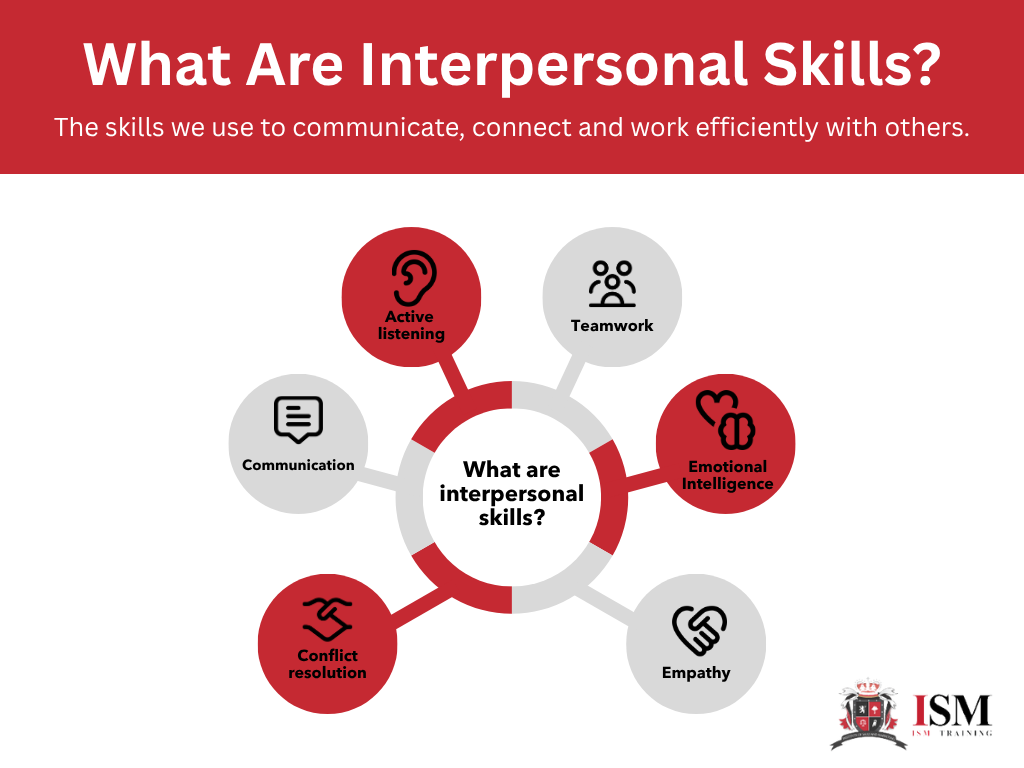
Common examples include:
- communication
- active listening
- teamwork
- empathy
- conflict resolution
- emotional intelligence
- problem-solving
- patience
- respect
Unlike technical skills, which help employees complete specific tasks, interpersonal skills help them communicate and work with others.
You can learn more about the differences in our article on soft skills vs. technical skills.
Why Are Interpersonal Skills Important?
Most jobs involve working with other people, which makes interpersonal skills so important.
Technical knowledge helps employees do their tasks. Interpersonal skills help them share ideas and work with others. They also help employees handle challenges in a professional way.
Employees with strong interpersonal skills are often better able to:
- explain ideas clearly
- work effectively with others
- handle conflict
- understand different needs
- build trust
- deal with stress
- support clients
- contribute to a positive workplace
These skills are especially important in UAE workplaces, where employees often work with colleagues and customers from different cultural backgrounds.
What Are the Benefits of Interpersonal Skills?
Good interpersonal skills can make work easier and help people work better together.
They can improve communication and help build strong relationships at work.
Some benefits include:
- better communication
- stronger work relationships
- better customer service
- improved teamwork
- easier ways to solve problems
- better leadership
- more trust between people
For example, employees who communicate clearly can avoid misunderstandings, while managers who listen to their teams can identify problems before they become more serious.
These skills can help employees feel happier at work and can also help a business perform better.
What Are Interpersonal Communication Skills?
Interpersonal communication skills help people share information and understand each other.
Communication is not only about speaking. It also includes listening, body language, tone of voice, asking questions, and giving feedback.
Important communication skills include:
- listening carefully
- speaking clearly
- asking helpful questions
- giving useful feedback
- understanding other people’s feelings
- using positive body language
- changing how you communicate when needed
- handling difficult conversations calmly
A person with good communication and interpersonal skills shows this in the way they behave at work.
They listen without interrupting, accept feedback professionally, respect other people’s opinions and stay calm in difficult situations.
These skills are useful in every job and at every level of an organisation.
What Are Examples of Interpersonal Skills at Work?
Interpersonal skills are used in everyday workplace situations.
Some common examples include:
| Interpersonal Skill | Workplace Example |
|---|---|
| Active listening | Listening carefully when a colleague explains a problem before offering advice. |
| Teamwork | Working with colleagues from different departments to complete a project. |
| Empathy | Understanding how someone feels and recognising when they need support. |
| Conflict resolution | Solving disagreements calmly and finding a solution that works for everyone. |
| Giving feedback | Providing helpful advice to support someone’s improvement. |
| Flexibility | Changing your approach when working with different people or situations. |
For example, a manager might use active listening during a team meeting, while a customer service employee might use empathy when dealing with an unhappy client.
These are simple examples of how interpersonal skills help people work better together.
How Can You Improve Interpersonal Skills?
You can develop interpersonal skills through practice, feedback, self-awareness and training.
Start by listening carefully and avoiding unnecessary interruptions. Use clear language, especially when explaining complex information.
Ask colleagues or managers for feedback on how you communicate and work with others. Pay attention to your tone of voice, body language and emotional reactions.
It is also important to practise difficult conversations instead of avoiding them.
You can improve your interpersonal skills by:
- asking questions when something is unclear
- listening before responding
- being open to constructive feedback
- considering other people’s points of view
- staying calm during disagreements
- practising clear and respectful communication
Training can provide a safe environment to practise these skills and apply them to real workplace situations.
ISM Dubai’s Interpersonal Skills training course helps professionals develop communication, active listening, conflict resolution and relationship-building skills through practical learning.
Why Do Managers Need Interpersonal Skills?
Managers rely on strong interpersonal skills to lead people effectively.
They need to set clear expectations, give feedback, support employees, solve problems and build positive working relationships.
Strong managers usually:
- communicate clearly
- listen to employees
- show respect
- give helpful feedback
- deal with problems early
- stay calm under pressure
- understand different working styles
- build trust within the team
For example, a manager with good interpersonal skills can handle a disagreement between team members without making the situation worse.
Technical knowledge is important, but it is not always enough. Managers also need strong people skills to lead teams successfully.
What Causes Poor Interpersonal Skills at Work?
Poor interpersonal skills can make it hard to work with others.
Common signs include:
- interrupting
- poor communication
- avoiding problems
- getting angry
- making assumptions
- blaming others
- not listening
- lack of empathy
These behaviours can lead to misunderstandings, workplace conflict and weaker working relationships.
However, people can improve these skills with practice, feedback and training.
How Can ISM Training Help Develop Interpersonal Skills?
ISM Training Dubai provides practical interpersonal skills training based on real workplace situations.
Our courses help employees and managers communicate with more confidence.
They are also designed to strengthen leadership and relationship-building skills.
Our Interpersonal Skills course focuses on active listening, effective communication, understanding body language, handling disagreements and building stronger professional relationships.
The focus is not only on understanding interpersonal skills, but also on applying them successfully at work.
Contact us to find out how ISM Training Dubai can help your team develop stronger people skills.