AI in project management can help teams plan work, manage risks and analyse information. It can also save time by helping project managers complete everyday tasks faster. It can support many parts of a project, from creating a schedule to writing a final report.
This gives project managers more time to focus on people, problems and important decisions.
This article is part of our Artificial Intelligence Guide. We explain how AI works in project management and where you can use it. We also describe what project leads need to consider before using it.
Why Trust ISM Training?
Over 20,000+ graduates
Have advanced their career with ISM Training
89%
of ISM graduates say our course helped them get a promotion.
76%
said that their training helped then increase their salary.
97%
of graduates want to study more of our courses.
Our graduates are working in some of the biggest companies worldwide, companies like...






What is AI in project management?
Project managers can use artificial intelligence to help plan, manage and deliver tasks. AI tools can analyse information and create content. They can also help project coordinators make decisions and automate simple tasks.
The aim is not to let AI manage the whole project, but to use it as a tool to support the project manager.
How is artificial intelligence used in project management?
Artificial intelligence is used in project management for planning, scheduling, risk management, reporting and administrative tasks.
Some of the most common uses include:
Project planning and forecasting
AI can help project managers make plans and predict what may happen. It can break work into smaller tasks, show which tasks depend on others and suggest timelines.
Scheduling and task management
An AI scheduling assistant can help organise tasks, deadlines and schedules. It can spot clashes and help adjust plans when priorities change.
Project risk management
AI can help professionals spot risks early. It can highlight signs of delays, rising costs or limited resources so managers can decide what action to take.
Reporting and administration
AI can save time on reports and admin tasks. It can summarise documents, organise meeting notes and draft reports.
Start your course today!
We offer a comprehensive curriculum that covers all of the essential topics. Our experienced instructors will provide you with the support and guidance that you need to succeed.
What are some examples of AI in project management?
Professionals can use AI for everyday tasks such as planning, reporting, research and communication.
According to AIPMtools, 68% of project teams are already using at least one AI tool. This shows that AI is quickly becoming a standard part of project work, making it increasingly important for project managers to understand how to use it effectively.
For example, AI can help you:
- Create a first draft of a project plan
- Summarise meetings
- Turn meeting notes into action points
- Create project status reports
- Identify possible risks
- Organise tasks
- Analyse project information
- Draft emails
- Compare different project options
- Brainstorm solutions
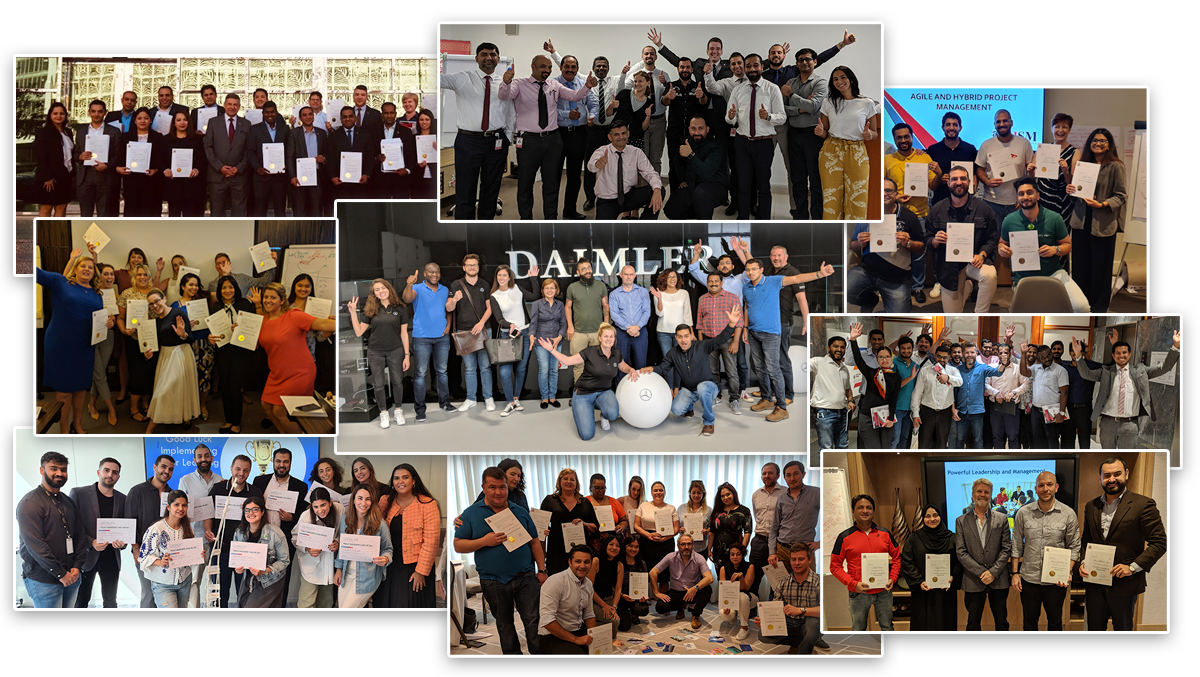
We let our graduates do the talking...
What AI prompts can project managers use?
Project managers can use clear AI prompts to help with planning, risk management, meetings and communication. The more context you provide, the more useful the response is likely to be. For example:
- Project risks: “Look at this project plan and find five possible risks. Explain what could happen because of each risk and how we can reduce it.”
- Meeting notes: “Summarise these meeting notes. Include the main decisions, actions, who is responsible and any deadlines.”
- Stakeholder communication: “Turn this project update into a short summary for senior managers. Focus on progress, risks and what happens next.”
- Project planning: “Look at this project scope and create a draft task list. Show which tasks depend on other tasks.”
Always review the answer before using it. AI can make mistakes or misunderstand information.
Prompt skills are also becoming more important across the UAE. Learn more about the One Million Prompters initiative.
Looking further ahead?
View our course calendar in full
What are the benefits of AI in project management?
The main benefits of AI in project management are saving time, reducing repetitive work and helping managers use project information more effectively.
According to AIQlabs, AI automated 20-40 hours of admin work weekly for those who use it. This shows how AI can reduce routine workload and give project managers more time to focus on higher-value tasks.
AI can help project teams:
- Complete administrative tasks faster
- Analyse large amounts of information
- Create reports and summaries
- Identify risks earlier
- Explore different project scenarios
- Improve productivity
- Spend more time working with their teams
The benefits will depend on how AI is used. Simply introducing an AI tool does not automatically make a project more successful.
How can AI improve decision-making in project management?
AI can support project decision-making by analysing information, comparing options and highlighting possible risks.
For example, a project manager could ask an AI tool to compare different project plans or summarise information from several reports.
AI can make this process faster, but it should not make important decisions on its own. Employees still need to consider budgets, people, business goals and professional judgement.
What are the disadvantages of AI in project management?
The main disadvantages of AI in project management include inaccurate information and data privacy risks. There is also a risk of becoming too reliant on technology.
AI can produce information that sounds correct but is wrong. It may also misunderstand the context of a project.
Businesses also need to think carefully about the information employees share with AI tools. Project information may contain confidential business, customer or employee data.
Professionals should understand their workplace’s rules for using AI. They should also always check important AI-generated information.
Will AI replace project managers?
AI is unlikely to replace the full role of a project manager, but it is likely to change how they work. This reflects a wider question about whether AI will replace jobs.
AI can already help with tasks like reporting, scheduling, research and data analysis.
Project coordinators need to communicate with stakeholders, manage disagreements and motivate teams. They also need to negotiate and make difficult decisions.
AI can support these activities, but human judgement remains important.
In the future, project managers may spend less time on routine administration. This could give them more time to lead people and solve complex problems.
As project managers spend less time on administration, leadership skills may become even more important. Read more about AI and leadership.
What AI skills do project managers need?
Project managers need to understand how to use AI effectively, check its work and recognise its limitations. They do not need to become AI developers.
Useful skills include:
- AI literacy
- Writing effective prompts
- Critical thinking
- Data literacy
- Decision-making
- Communication
- Leadership
- Understanding AI risks
- Data privacy awareness
Learning these skills can help project managers use AI with more confidence while avoiding common mistakes.
Developing practical AI skills also supports the UAE’s wider AI ambitions. Read more about the UAE Artificial Intelligence Strategy 2031.
Develop practical AI skills with ISM
AI training can help project managers use artificial intelligence safely and confidently. It can also help them use AI more effectively at work. Having access to tools such as ChatGPT, Claude or Microsoft Copilot is only the first step.
ISM provides practical AI training built around real workplace situations. Our courses help professionals get more from AI tools while understanding their risks, limitations and responsible use.
With the right skills, project managers can save time, improve productivity and make AI a valuable part of everyday project delivery.
Ready to build your AI skills? Explore our AI courses or contact us today to find the right training for you.
Frequently Asked Questions
Artificial intelligence in project management involves using AI-powered tools to support tasks such as planning, scheduling, reporting, risk management, and decision-making.
AI helps project managers save time, analyse information and summarise meetings. It creates reports, identifies risks, and supports project planning.
AI can automate some project management tasks, but it cannot replace all the human skills needed to manage a project. Leadership, communication, negotiation and professional judgement remain important.
AI can help project managers save time by summarising meetings, creating reports, identifying risks and supporting planning. However, AI-generated work should always be checked carefully and used in line with company privacy, security and AI policies.
AI can help project managers organise information, compare options, and identify risks to make faster decisions, while still considering people, budgets, and business goals.
Project managers can begin using AI for simple, low-risk tasks like summarising meetings, drafting reports, and organising information, then expand its use as their confidence grows.
Join 1000's of individuals and teams certified by the Institute of Sales & Marketing
Our trending courses
At ISM, we combine top-tier training courses with industry-leading instructors.
View all coursesTestimonials from Our Valued Clients
Discover the transformative experiences our clients have had with our training programs.
Hear directly from those who have unlocked their potential and achieved remarkable success.

Some other providers courses can be quite a chore! However, I felt fully engaged and excited by all the new selling tools I have...

Daniel Graham
Instead of just telling me what to do, they showed us how to do it as well as why to do it. They used real-life experiences...

Sujit Nair
The training was delivered in an easy to absorb manner and focused on all the key areas...

Paul Baker CFP